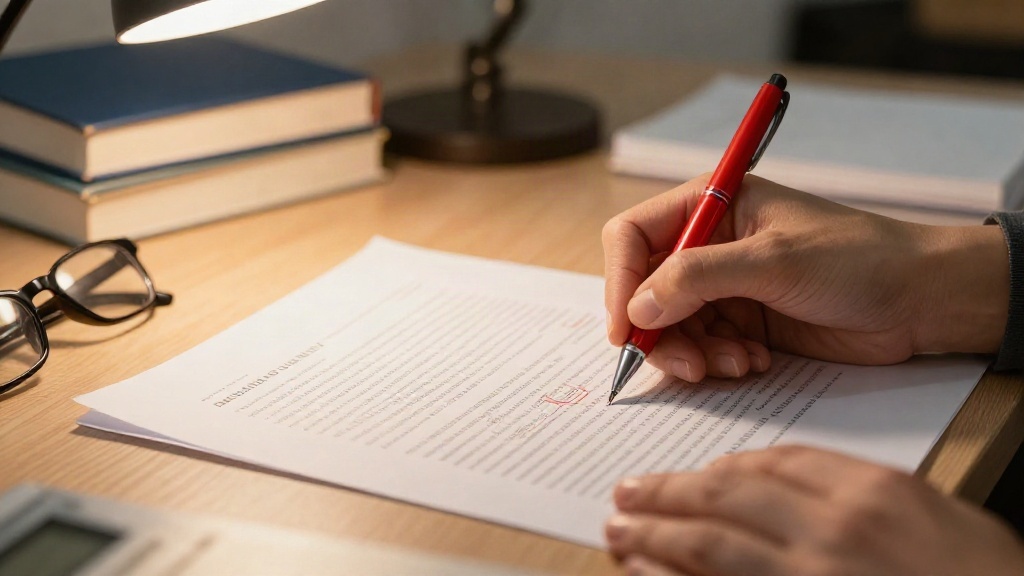


Dense, inaccessible academic prose puts students off reading — which leads to weaker essays, shallower understanding and increasing avoidance. The problem is rarely the student. Here is a practical guide to reading academic texts efficiently and retaining what matters.
Many university students reach a point where they stop reading the academic sources on their reading list. The books are opened, the first few pages attempted, the density encountered, and the decision made — consciously or not — that this particular text is too hard, too dry, too impenetrable to be worth the effort. The student stops reading. The essay that results is shallower for it.
This is not primarily a motivation problem. It is a reading strategy problem.
The myth of linear academic reading
Most students approach academic texts the way they approach novels: page one, read in order, finish at the end. This is the wrong approach for academic reading. Academic texts are not linear arguments built for a first-time reader experiencing them in sequence. They are reference structures built for people who know roughly where to find what they need.
Before reading any section of an academic text in detail, survey the whole. Read the abstract or introduction. Scan the headings. Read the conclusion. Now you have a map of the argument. When you return to read sections in detail, you understand the purpose of what you are reading and can judge its relevance to your work.
Read with a purpose, not for comprehension
Aimless reading for general comprehension of an academic text is exhausting and inefficient. Before opening any source, define your reading purpose in one sentence: "I am reading this to understand how the author defines X" or "I need to find evidence for or against claim Y" or "I want to understand the methodology used in this study."
With a defined purpose, you can stop when you have found what you need. You are not obliged to read every word. You are obliged to find what you came for.
Note-taking while reading
Passive reading produces very little retention. Active reading — where you pause periodically to summarise what you have just read in your own words, note key claims and questions they raise, and mark passages that are relevant to your argument — produces significantly better comprehension and recall.
You do not need to understand every academic text fully. You need to extract what is relevant, accurately, efficiently. That is a skill — and it is learnable.