

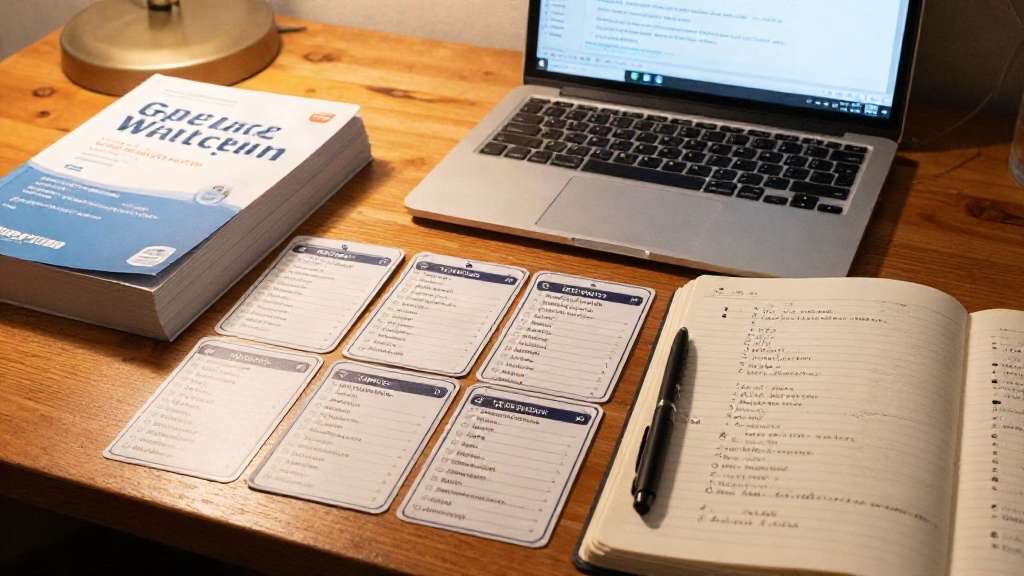
Most GRE verbal preparation focuses on vocabulary. But vocabulary alone is not enough — many students waste months memorising word lists that barely move the needle. Here is a more effective strategy combining targeted vocabulary work with the reading comprehension and reasoning skills the test actually measures.
The GRE Verbal section is frequently approached as a vocabulary problem. Get enough words, the thinking goes, and the Verbal score will follow. This is not wrong — vocabulary matters — but it is incomplete, and students who focus exclusively on word lists often plateau well below their target score.
A more effective approach treats GRE Verbal as three distinct skills, each requiring different preparation.
Vocabulary: necessary but not sufficient
GRE vocabulary is genuinely challenging and cannot be avoided. But the key insight is this: GRE vocabulary questions rarely test whether you know a word in isolation. They test whether you can use contextual reasoning to determine meaning in a complex sentence. A student who has memorised 500 words but cannot parse dense academic prose will underperform a student who knows 300 words and reads critically.
Focus vocabulary study on high-frequency GRE words (1,200 is a good working target), but equally practise reading academic texts that use sophisticated vocabulary in context. The NYT, academic journals, literary essays — reading widely builds the contextual reasoning that vocabulary drilling alone does not.
Text completion and sentence equivalence
These question types test your ability to determine which word or phrase logically and stylistically completes a sentence. The strategy: read the full sentence before looking at any options. Identify what kind of word the blank requires — positive or negative, contrast or continuation? Generate your own candidate word before reading the options. This prevents the answer choices from anchoring your thinking in the wrong direction.
Reading comprehension
GRE reading passages are dense, abstract and often dry. The key is not to read for enjoyment or full comprehension — it is to read strategically. Identify the main point of each paragraph in one sentence. Note the author's stance. Identify any counter-arguments and how the author handles them. Answer questions by returning to the passage rather than relying on memory.
GRE Verbal rewards strategic reading and careful reasoning more than raw vocabulary. Build both, and your score will reflect it.